
Documentation Index
Fetch the complete documentation index at: https://docs.cadcamfun.xyz/llms.txt
Use this file to discover all available pages before exploring further.
Collaboration and Sharing
Overview of Collaboration Features
Collaborative Architecture
Collaborative Architecture
- Real-time collaboration: Multiple users can work simultaneously on the same project
- Cloud synchronization: Access projects from any device and location
- Permission system: Granular control over who can view or modify what
- Complete history: Track all changes with rollback capability
- Smart notifications: Targeted updates on relevant changes
Multidisciplinary Integration
Multidisciplinary Integration
- CAD designers: Creation and modification of geometry
- CAM programmers: Toolpath generation
- Process engineers: Production parameter definition
- Production staff: Access to manufacturing information
- Managers: Progress and timeline supervision
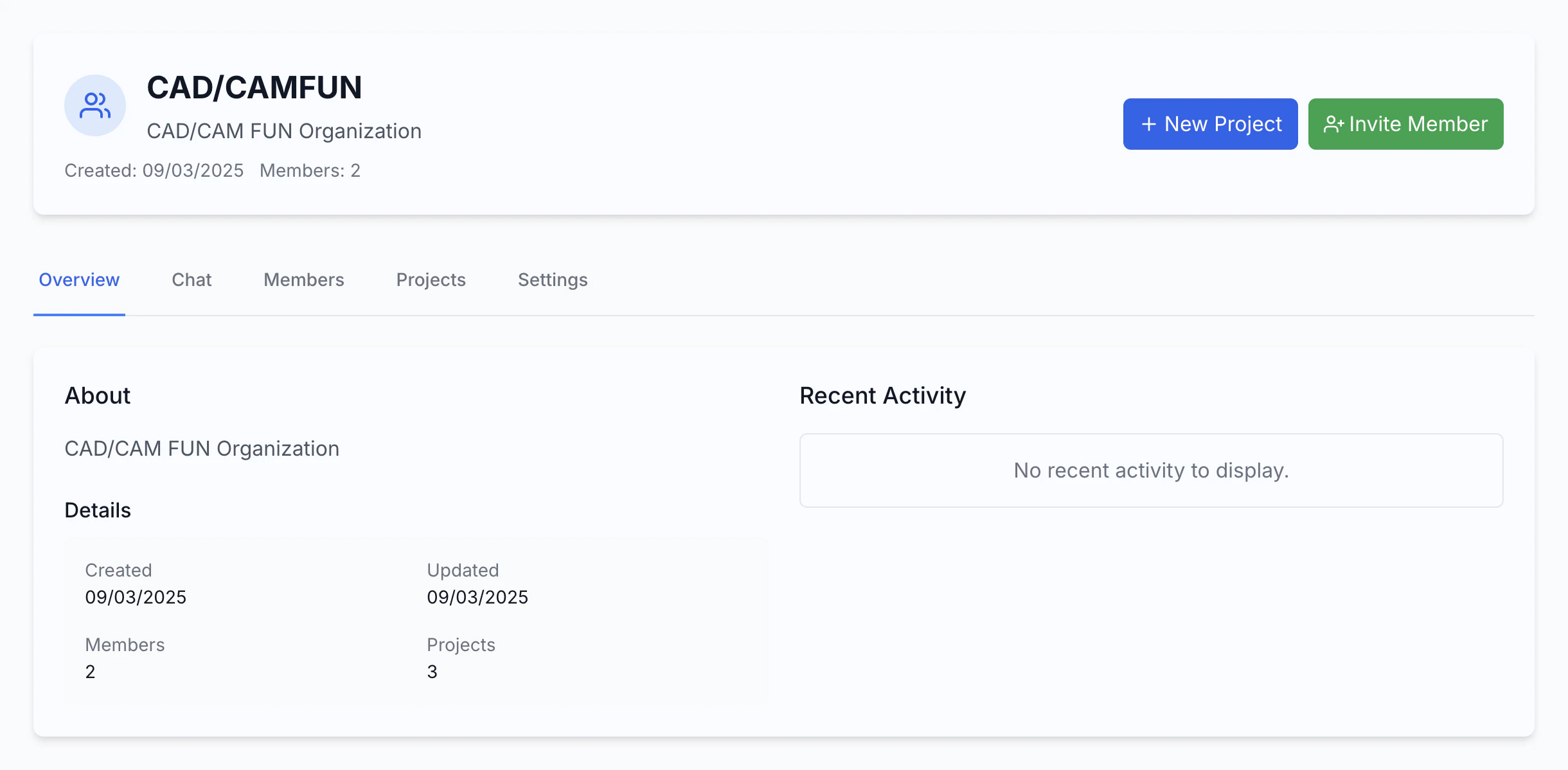
User and Permission Management
User System
- Individual accounts with personal settings
- Predefined roles (Admin, Designer, Programmer, etc.)
- Custom roles for your organization
- User groups for functional teams
- Centralized administration
Permission Configuration
- Organization-level global permissions
- Project-specific access control
- Element-level permissions
- Feature-level restrictions
- Time-limited access
Permission Management Process
Real-Time Collaboration
Synchronous Co-editing
Real-time Editing
Presence Indicators
Smart Locking
Conflict Resolution
Automatic Merging
Integrated Communication
Contextual Chat
Contextual Chat
- Real-time messaging in the project context
- Threaded discussions
- File sharing
- Mention notifications
Comments and Annotations
Comments and Annotations
- Notes linked to specific project elements
- Visual markup
- Version-specific comments
- Resolution tracking
Virtual Meetings
Virtual Meetings
- Collaboration sessions with screen sharing
- Voice and video chat
- Recording capability
- Meeting scheduling
Calendar Integration
Calendar Integration
- Planning of collaborative sessions
- Availability management
- Meeting reminders
- Schedule synchronization
Using Real-Time Collaboration
Best Practices for Synchronous Collaboration
Planning
Planning
- Define objectives clearly
- Assign areas of responsibility
- Set timeframes
- Prepare materials
Communication
Communication
- Keep everyone informed
- Use clear language
- Document decisions
- Share progress updates
Checkpoints
Checkpoints
- Regular progress reviews
- Status updates
- Issue resolution
- Next steps planning
Documentation
Documentation
- Record decisions
- Track changes
- Note reasoning
- Update documentation
Final Review
Final Review
- Collective verification
- Quality check
- Completion confirmation
- Follow-up planning
Revision and Version Management
Version Control System
Automatic Saving
Explicit Versions
Branch and Fork
Merge
Rollback
Change Tracking
Visual Differences
Visual Differences
- Graphical highlighting of changes
- Side-by-side comparison
- Change visualization
- Interactive diff view
Detailed Log
Detailed Log
- Chronological record
- Change history
- User tracking
- Timestamp information
Filters and Search
Filters and Search
- Easy identification
- Advanced filtering
- Search capabilities
- Custom queries
Change Statistics
Change Statistics
- Quantitative analysis
- Change metrics
- Progress tracking
- Performance indicators
Change Attributes
Change Attributes
- Author information
- Date tracking
- Change reasons
- Impact assessment
Review Workflow
Review Requests
Review Requests
- Formal submission
- Review criteria
- Deadline setting
- Priority assignment
Contextual Feedback
Contextual Feedback
- Element-specific comments
- Visual annotations
- Change suggestions
- Improvement requests
Approval Status
Approval Status
- Status tracking
- Progress monitoring
- Approval workflow
- Completion verification
Digital Signatures
Digital Signatures
- Official approval
- Authentication
- Audit trail
- Compliance tracking
Stakeholder Notification
Stakeholder Notification
- Automatic updates
- Status changes
- Action required
- Deadline reminders
Using the Review System
Project and File Sharing
Sharing Methods
Internal Sharing
External Sharing
Access Links
Project Packages
Standard Formats
Sharing Control
Content Selection
Content Selection
- Project selection
- Component filtering
- Version control
- Access management
Access Levels
Access Levels
- Read-only access
- Edit permissions
- Admin rights
- Custom roles
Access Expiration
Access Expiration
- Time limits
- Automatic expiration
- Renewal options
- Access tracking
Password Protection
Password Protection
- Security settings
- Access codes
- Two-factor authentication
- Security policies
Access Revocation
Access Revocation
- Immediate termination
- Access removal
- Security alerts
- Audit logging
Web Viewer
Browser Access
Browser Access
- No software installation
- Universal access
- Cross-platform support
- Responsive design
User Interface
User Interface
- Intuitive navigation
- Simple controls
- Clear layout
- Helpful guides
Annotation Features
Annotation Features
- Comment addition
- Markup tools
- Feedback collection
- Change tracking
Analysis Tools
Analysis Tools
- Basic measurements
- Dimension checking
- Distance calculation
- Angle measurement
Mobile Support
Mobile Support
- Responsive design
- Touch controls
- Mobile optimization
- Offline access
Sharing Tracking and Analysis
Access Notifications
Access Notifications
- View tracking
- Access alerts
- Activity monitoring
- Usage reports
Usage Statistics
Usage Statistics
- Access frequency
- User patterns
- Time analysis
- Performance metrics
Activity Log
Activity Log
- Action tracking
- User activity
- Change history
- Audit trail
Sharing Reports
Sharing Reports
Feedback Analysis
Feedback Analysis
- Comment collection
- Response tracking
- Improvement suggestions
- User satisfaction
Integration with External Collaboration Tools
Supported Platforms
PLM Systems
Project Management
Communication Tools
File Sharing
ERP Systems
Integration Configuration
Bidirectional Synchronization
File Sync
File Sync
- Automatic updates
- Version control
- Conflict resolution
- Change tracking
Metadata Transfer
Metadata Transfer
- Context preservation
- Property mapping
- Data consistency
- Information integrity
Cross-platform Notifications
Cross-platform Notifications
- Update alerts
- Status changes
- Action required
- System events
Status Tracking
Status Tracking
- Progress monitoring
- State synchronization
- Update verification
- Consistency checks
Conflict Management
Conflict Management
- Conflict detection
- Resolution strategies
- Version control
- Data integrity
Integrated Workflows
Automatic Triggers
Automatic Triggers
- Process automation
- Event handling
- Action sequences
- Workflow rules
Task Linking
Task Linking
- Activity connections
- Dependencies
- Progress tracking
- Status updates
Cross-platform Approvals
Cross-platform Approvals
- Multi-system workflow
- Approval chains
- Status tracking
- Completion verification
Unified Reporting
Unified Reporting
- Combined data
- Cross-system analysis
- Performance metrics
- Progress tracking
Integrated Dashboard
Integrated Dashboard
- System overview
- Status monitoring
- Performance tracking
- Activity visualization
Virtual and Augmented Reality Collaboration
VR/AR Features
VR Exploration
AR Annotations
Collaborative Review
Digital Twin
Contextual Simulation
Supported Devices
VR Headsets
VR Headsets
- Oculus
- HTC Vive
- Valve Index
- Other compatible devices
AR Devices
AR Devices
- HoloLens
- Magic Leap
- Mobile AR devices
- AR glasses
CAVE Displays
CAVE Displays
- Multi-wall systems
- Immersive environments
- Projection systems
- Interactive displays
Hybrid Devices
Hybrid Devices
- Combined VR/AR
- Mixed reality
- Cross-platform support
- Device flexibility
Tracking Accessories
Tracking Accessories
- Controllers
- Motion trackers
- Haptic gloves
- Input devices
Starting a VR/AR Session
Best Practices for VR/AR Collaboration
Environment Preparation
Environment Preparation
- Space requirements
- Equipment setup
- Network connectivity
- Safety measures
Preliminary Briefing
Preliminary Briefing
- Session objectives
- User protocols
- Safety guidelines
- Communication rules
Session Management
Session Management
- Duration limits
- Break scheduling
- Fatigue prevention
- Comfort monitoring
Role Assignment
Role Assignment
- Session moderator
- Technical support
- Participant roles
- Responsibility distribution
Documentation
Documentation
- Session recording
- Note taking
- Action items
- Follow-up planning
Asynchronous Collaboration
Tools for Asynchronous Work
Task Management
Contextual Communication
Smart Notifications
Scheduled Reviews
Complete History
Asynchronous Workflow
Coordination Mechanisms
Activity Dashboard
Activity Dashboard
- Project status overview
- Progress tracking
- Task status
- Performance metrics
Project Timeline
Project Timeline
- Chronological view
- Milestone tracking
- Deadline management
- Progress visualization
Task Dependencies
Task Dependencies
- Relationship mapping
- Sequence planning
- Impact analysis
- Critical path tracking
Milestones
Milestones
- Checkpoint definition
- Progress markers
- Achievement tracking
- Celebration points
Automatic Reports
Automatic Reports
- Status updates
- Progress reports
- Performance analysis
- Issue tracking
Priority Management
Prioritization System
Prioritization System
- Task importance levels
- Priority assignment
- Resource allocation
- Time management
Smart Filtering
Smart Filtering
- Relevance sorting
- Priority display
- Custom views
- Quick access
Escalation
Escalation
- Delay alerts
- Critical task handling
- Issue escalation
- Resolution tracking
Load Balancing
Load Balancing
- Work distribution
- Resource allocation
- Capacity planning
- Efficiency optimization
Dynamic Adaptation
Dynamic Adaptation
- Priority updates
- Schedule adjustments
- Resource reallocation
- Process optimization
Security and Compliance in Collaboration
Intellectual Property Protection
Watermarking
DRM
Access Tracking
Activity Logs
Access Revocation
Regulatory Compliance
GDPR
GDPR
- Personal data protection
- Privacy compliance
- Data handling
- User rights
ITAR/EAR
ITAR/EAR
- Export control
- Security measures
- Compliance tracking
- Documentation
ISO 27001
ISO 27001
- Security standards
- Risk management
- Control measures
- Audit support
Audit Trail
Audit Trail
- Activity logging
- Change tracking
- Compliance verification
- Documentation
Consent Management
Consent Management
- User consent
- Data sharing
- Privacy settings
- Compliance tracking
Data Classification
Confidentiality Levels
Confidentiality Levels
- Sensitivity classification
- Access control
- Security measures
- Protection levels
Automatic Labeling
Automatic Labeling
- Content analysis
- Classification rules
- Label management
- Policy enforcement
Classification-based Policies
Classification-based Policies
- Access rules
- Security measures
- Handling procedures
- Compliance requirements
Visibility Control
Visibility Control
- Access restrictions
- View limitations
- Sharing controls
- Security boundaries
Access Monitoring
Access Monitoring
- Usage tracking
- Security alerts
- Compliance monitoring
- Audit logging
Infrastructure Security
End-to-end Encryption
End-to-end Encryption
- Data protection
- Secure transmission
- Storage security
- Access control
Multi-factor Authentication
Multi-factor Authentication
- Identity verification
- Security layers
- Access control
- Login protection
VPN Support
VPN Support
- Secure connections
- Remote access
- Data protection
- Network security
Integrity Checks
Integrity Checks
- Data validation
- Change detection
- Security verification
- Compliance checking
Secure Backups
Secure Backups
- Data protection
- Recovery options
- Backup management
- Disaster recovery
Tips and Best Practices for Collaboration
Collaboration Planning
Role Definition
Role Definition
- Clear responsibilities
- Expertise areas
- Task assignment
- Team structure
Naming Conventions
Naming Conventions
- File naming rules
- Version labeling
- Project organization
- Standard formats
Workflow Documentation
Workflow Documentation
- Process definition
- Step documentation
- Guidelines
- Best practices
Communication Plan
Communication Plan
- Channel selection
- Frequency setting
- Protocol definition
- Response times
Team Training
Team Training
- Tool familiarization
- Process training
- Best practices
- Skill development
Effective Communication
Contextualization
Contextualization
- Element references
- Clear context
- Specific details
- Purpose explanation
Conciseness
Conciseness
- Clear messages
- Essential information
- Focused content
- Efficient communication
Clear Requests
Clear Requests
- Specific requirements
- Clear objectives
- Expected outcomes
- Timeline definition
Constructive Feedback
Constructive Feedback
- Positive approach
- Specific suggestions
- Improvement focus
- Action items
Decision Documentation
Decision Documentation
- Choice recording
- Rationale documentation
- Impact assessment
- Follow-up planning
Conflict Management
Data-based Resolution
Data-based Resolution
- Fact analysis
- Evidence review
- Objective assessment
- Solution development
Collaborative Approach
Collaborative Approach
- Team involvement
- Consensus building
- Win-win solutions
- Relationship maintenance
Structured Escalation
Structured Escalation
- Clear process
- Level definition
- Resolution path
- Documentation
Mediation
Mediation
- Neutral facilitation
- Fair resolution
- Communication support
- Agreement building
Smart Compromise
Smart Compromise
- Priority balancing
- Resource allocation
- Timeline adjustment
- Quality maintenance
Continuous Improvement
Regular Retrospectives
Regular Retrospectives
- Process review
- Performance analysis
- Improvement identification
- Action planning
Effectiveness Metrics
Effectiveness Metrics
- Performance tracking
- Quality measures
- Efficiency analysis
- Progress monitoring
Feedback Collection
Feedback Collection
- User input
- Process feedback
- Tool evaluation
- Improvement suggestions
Experimentation
Experimentation
- New approaches
- Tool testing
- Process innovation
- Method evaluation
Best Practices Sharing
Best Practices Sharing
- Knowledge transfer
- Experience sharing
- Success stories
- Learning distribution
Effective collaboration is a multiplier of productivity and quality in CAD/CAM projects. The features offered by the application support distributed and multidisciplinary teams, while ensuring security and traceability. In the next section, we will explore the support and troubleshooting features to help you overcome any difficulties.